
Your hosting questions
PROSPER facilitates the solar project. The hosting provider named in the official supplier agreement owes the hosting payments and equipment service. Review the agreement in your native solar contract packet before signing.
Current offer: one PRO 6000 Max with qualifying new or second-system solar. $22,000 equipment + $500 installation = $22,500 once. Battery-only and standalone node projects are ineligible.
19 questions
Is the payment guaranteed — what if the node doesn’t earn much that month?
The PRO 6000 Max hosting agreement defines a $400 fixed monthly base for each full eligible month, even at zero compute utilization, demand or receipts. The hosting provider named in the signed agreement bears that compute-revenue risk and owes the payment; PROSPER facilitates the project. The additional network performance bonus is variable, capped at $400 for Max, and can be zero. The base is a defined contribution you can apply to bills. It does not promise every bill will be paid in full or cap your electric bill. This is a contractual provider obligation, not proof of insurance or a funded guarantee; the provider must remain able to perform.
Who owns the node, and what does the homeowner pay for it?
The hosting provider retains title to the node throughout the 30-year service term and handles the agreed upgrades, maintenance, repair and replacement. The PRO 6000 Max project addition is $22,500: $22,000 equipment plus $500 installation labor, counted once in the qualifying solar project. It is not free. A qualifying approved financing option may permit $0 down; cash purchasers pay the agreed cash price and any required deposit under their contract. The separate solar loan, lease or PPA has its own charges and obligations.
How and when does the homeowner get paid?
Eligible hosting starts after installation, commissioning and acceptance by the hosting provider; it does not wait for the first paid compute job. Partial eligible months are prorated. The provider initiates the prior month’s fixed base and earned bonus on or before the 15th of the following month with an itemized statement, rather than waiting on compute collections to fund the base. First payment depends on activation and the monthly payment cycle; it is not guaranteed 30 days after installation. Set up bank details only in the provider’s official app. You may separately authorize part or all of the payment toward electricity, internet, solar, financing or battery bills. Each dollar applied to a bill reduces cash received by one dollar; it is not an additional payment, and you remain responsible for unpaid bills.
Can the homeowner cancel?
The hosting agreement has a 30-year service term and no terminate-for-convenience option. It may end by mutual written agreement or under applicable law; statutory cancellation rights remain. The agreement does not require the homeowner to repay fixed base payments from personal funds. A qualifying permanent failure by the hosting provider can trigger the limited fair market value financing credit described separately. Ending or changing hosting does not cancel a separate solar loan, lease or PPA, change its payments or automatically pay off the node’s financed cost.
What happens to the node’s cost in the financing if hosting ends or the vendor removes the node?
The node’s cost can remain in the separate solar loan, lease or PPA, which continues on its own terms. Choosing to stop hosting creates no financing credit. Section 16.1 describes a limited fair market value (FMV) financing credit if the hosting provider permanently ceases operations or permanently fails to provide the required base payments and equipment upkeep. Under that provision, the provider retrieves the node and pays its independently appraised current fair market value toward the homeowner’s designated financing within 90 days after the finalized appraisal. This is the used equipment’s current value, not its original cost and not a guaranteed loan payoff. Recovery is subject to bankruptcy law if the provider is insolvent. Ordinary outages, maintenance, repairs, temporary removal and equipment swaps do not trigger this credit.
What happens if the homeowner sells the home or moves?
Notify the hosting provider before a sale, move or change in occupancy. The node is intended to stay with the home and its solar. The provider coordinates a written assumption of the remaining hosting term with the buyer’s consent, continued site eligibility and any required financing-provider approvals. After a completed assumption, the departing homeowner is released from future hosting obligations. If the financed solar itself can move to another property with all required approvals, the provider may arrange relocation of the node with it. A sale, move or unsuccessful transfer does not trigger the FMV financing credit. The hosting agreement does not itself transfer or alter the separate solar financing.
What exactly is the AI Node?
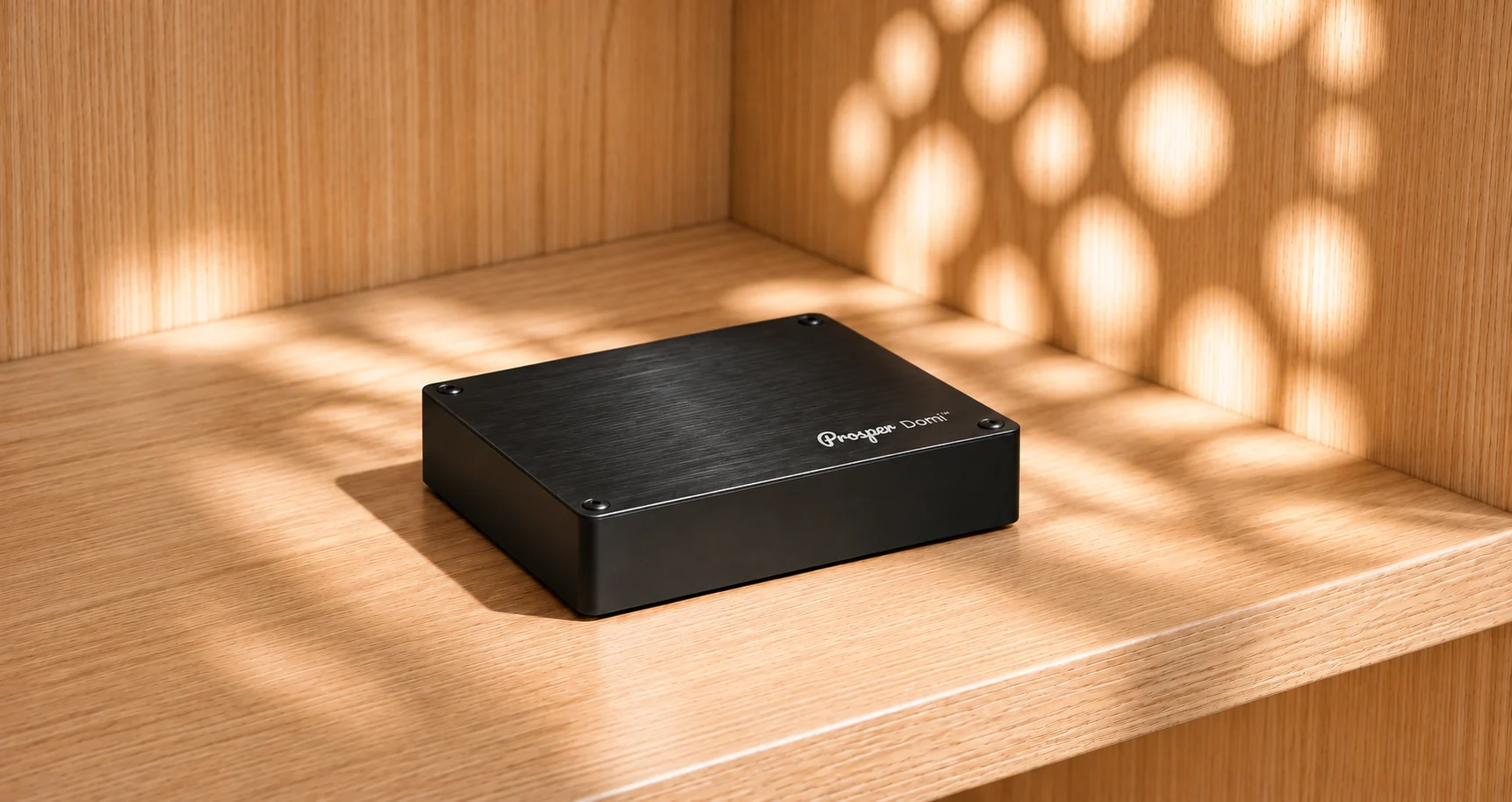
The current offer is one wall-mounted PRO 6000 Max node per home: a cooled indoor computer with one NVIDIA RTX PRO 6000 Blackwell Max-Q GPU and 96 GB of GPU memory. It uses an approved electrical outlet and a wired internet connection. Enterprises can rent general-purpose computing capacity through the provider’s network, marketplaces and direct arrangements. No particular customer, job or paid workload is promised. Additional nodes and other GPU models are not current customer offers.
What can it be sold with — can existing-solar or non-solar homes get one?
This launch program serves residential homeowners buying qualifying new solar in markets where the program is active, subject to address, installer, equipment and financing approval. A home with existing solar from any installer may qualify by purchasing an approved second solar system with the node. Standalone nodes, non-solar purchases and battery-only node sales are not available in the current offer. Availability does not extend automatically to all 50 states. The design must account for the node’s electrical load; added panels do not guarantee zero grid imports or a particular electric bill.
What does the node cost, and what does “$0 down” mean?
PRO 6000 Max adds $22,500 installed to the eligible project: $22,000 equipment and $500 labor. Include that amount once. If a solar cash price or financed payment already includes the node, do not add it again. In the native solar workflow, the platform pays the supplier for the equipment line; the homeowner pays under the solar project’s contract rather than making a separate equipment payment to the hosting provider. $0 down applies only when the selected qualifying financing or payment offer is approved and actually requires no upfront payment. A cash purchase includes the node in its full cash price and follows its agreed payment schedule; cash is not automatically $0 down. Never describe the node as free or as costing nothing.
Where does it go, and what does the home need?
The node mounts on a solid indoor wall in a dry, climate-controlled, ventilated location, often near the router or smart panel. It gives off heat, so placement, airflow and access matter. The installer and homeowner select an approved location during the site survey, and the hosting provider reviews suitability before installation. The home needs suitable electrical supply and a reliable wired connection delivering at least 1 Gbps symmetric: 1 Gbps upload and 1 Gbps download for the single node. Confirm ISP permission, service limits, temperature and noise. Technical references to up to 10 Gbps for multi-node sites do not make multi-node residential sales part of the current offer.
Is the income guaranteed?
The guaranteed part in the hosting agreement is the $400 fixed monthly base for full eligible Max hosting, owed by the named hosting provider under the signed terms. The $0–$400 network bonus is not guaranteed and may be zero. Gross hosting payments are before electricity, internet, financing, taxes and other household costs. They can help pay bills, but no specific net savings, total income, bonus or bill coverage is promised. Review who owes payment and the provider’s obligations before signing.
Who does the homeowner call for support or repairs?
The hosting provider owns, services, repairs and replaces the node under its agreement and supplies the official app for activity and payout tracking. Use the provider support and legal notice details in that signed agreement and official app. PROSPER can help coordinate the project at support@prosper.energy or 877-317-9079; its facilitator role does not replace the hosting provider’s payment or service obligations. Do not send banking details through this website, ordinary email or a rep’s chat.
Will the node do medical or scientific research?
Is the income taxable?
Hosting payouts may be taxable, and some expenses attributable to hosting may qualify for deductions under the homeowner’s circumstances. Equipment depreciation belongs to the equipment’s owner under the applicable tax rules; vendor-owned equipment is not a homeowner depreciation benefit. Obtain independent tax advice. PROSPER does not promise tax credits, bonus depreciation, deductions or after-tax income.
How do I review and sign the hosting agreement?
Review the official supplier hosting agreement included in the native Powur solar contract packet for your project. Its named hosting provider, equipment, payment terms, ownership, service, transfer and financing provisions control. The supplier agreement is signed through that native packet; PROSPER does not manually create or substitute a separate hosting contract. A cash quote, calculator result or intake save is preparation only and does not enroll the home, guarantee financing or establish a signed sale.
How is the node ordered and installed with solar?
The program orders the node after the solar installation is complete and funding has been received. Current planning lead time is about 1–2 weeks after that order, subject to actual availability and scheduling. Delivery to the installer’s warehouse is preferred. Node installation is additional work, estimated at about two hours, and does not block the solar installation. The scheduling target is between solar install-complete and inspection-complete, ideally before permission to operate (PTO); before-PTO installation, activation or income is not guaranteed. Hosting payments begin only after installation, commissioning and provider acceptance.
Will the node raise my electricity use or reduce battery backup?
The node uses household electricity, produces heat and may add cooling demand. The 600-watt example at 90% of a year uses about 4,730 kWh annually; actual use varies and must be checked against measured wall power. Design the qualifying solar addition for that load and confirm whether the quoted production already includes it. Surplus solar may offset some use, but nighttime grid imports, export value, battery losses, backup reserves and tariffs still matter. Count any added electricity and internet costs when comparing the $400 gross base with household expenses.
Do outages stop the base?
The agreement protects the fixed base during covered temporary power or internet interruptions, maintenance, repair, replacement, temporary removal and safety disconnection. The homeowner must still maintain required services, cooperate with restoration and allow agreed access. An ordinary interruption does not by itself trigger the permanent-failure FMV credit. Review the actual duties, protections and remedies in the signed agreement.
What determines the network performance bonus?
The bonus uses positive network-wide surplus from compute receipts actually collected after permitted bases, contractual commissions, eligible operating costs and documented replacement reserves. The capped pool is allocated using eligible node bonus caps and partial-month proration. Max caps the additional bonus at $400 per full eligible month. High utilization alone does not guarantee a bonus; collections and allowed costs can leave it at zero. Costs cannot be counted twice, unrelated losses and arbitrary owner distributions are excluded, and negative surplus does not carry forward under the template.
Source guidance explains the program; your case-specific signed hosting agreement and approved solar payment terms control.